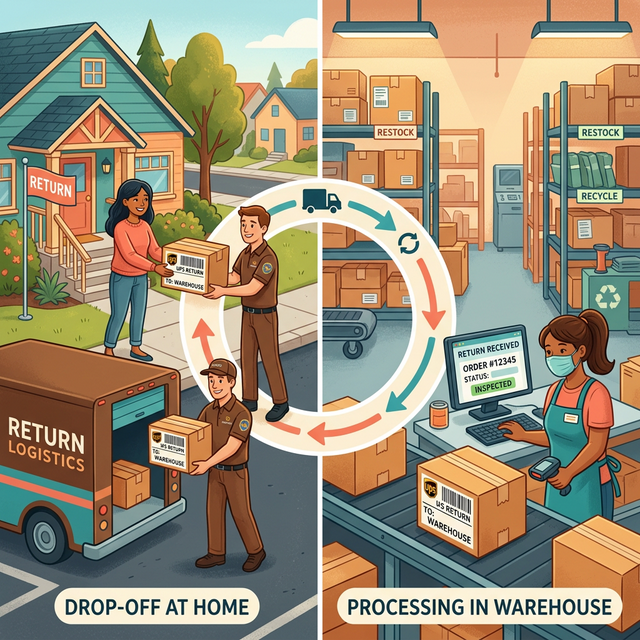
How Return Shipping Works
Return shipments flow in the opposite direction of your outbound shipping — from the end customer back to your warehouse or returns center. Both UPS and FedEx offer specialized return services, each with different mechanisms and cost structures.
Carrier Return Services
UPS Returns Services
| Service | How It Works | Cost Basis |
|---|---|---|
| UPS Print Return Label | You pre-print and include a return label in the outbound package | Charge billed when label is scanned |
| UPS Electronic Return Label | Customer receives a digital return label via email | Charge billed when label is scanned |
| UPS Returns Plus 1 | Driver picks up return at customer location (1 attempt) | Base rate + $4.00 pickup fee |
| UPS Returns Plus 3 | Driver makes up to 3 pickup attempts | Base rate + $8.00 pickup fee |
| UPS Returns Exchange | New package delivered, old package picked up simultaneously | Both shipments billed |
FedEx Return Services
| Service | How It Works | Cost Basis |
|---|---|---|
| FedEx Print Return Label | Pre-printed label included in outbound shipment | Charge billed when scanned |
| FedEx Electronic Return Label | Digital label emailed or accessible online | Charge billed when scanned |
| FedEx Ground Package Returns | Customer drops off at FedEx location or schedules pickup | Standard Ground rates |
| FedEx Express Returns | Priority return with express service levels | Express rates apply |
Return Shipment Pricing
Return shipments are generally priced using the same rate structure as outbound shipments — same zone × weight matrix, same surcharges. However, there are differences:
What’s the Same
- Base rates by service, zone, and weight
- Fuel surcharges
- DIM weight calculations
- Most accessorial surcharges
What’s Different
- No residential surcharge — returns are typically picked up at residences but delivered to commercial addresses (your warehouse)
- Return label fees — $1.00–$2.00 per label for electronic return labels
- Pickup fees — $4.00–$8.00 for carrier-initiated pickup return services
- Zone reversal — The zone may be different in the return direction if you have multiple warehouses
The True Cost of Returns
Returns don’t just cost you the return shipping label. The full cost includes:
| Cost Component | Typical Amount |
|---|---|
| Return shipping label | $8–$15 |
| Inbound processing labor | $3–$5 |
| Restocking/refurbishment | $2–$10 |
| Lost margin on sale | Varies |
| Customer service time | $2–$4 |
| Total cost per return | $15–$35+ |
With e-commerce return rates averaging 15–30% (and higher in apparel), returns logistics is a significant cost center.
Strategies to Reduce Return Costs
1. Negotiate Return-Specific Rates
Ask your carrier rep about return-specific pricing in your agreement. Some shippers negotiate deeper discounts on return shipments than outbound.
2. Use Ground for All Returns
Unless the customer is returning a time-sensitive or perishable item, there’s rarely a reason to use express services for returns. Ground returns are 50–70% cheaper than express.
3. Consolidate Return Locations
Route all returns to a single returns center rather than multiple warehouses. This simplifies logistics and can reduce average zone costs.
4. Offer Drop-Off Incentives
Returns dropped off at carrier locations avoid pickup surcharges and are typically cheaper for the carrier to process. Some brands offer small incentives (store credit, loyalty points) for customer drop-off returns.
5. Use USPS for Lightweight Returns
For lightweight returns (< 1 lb), USPS First Class Package Return Service is often cheaper than UPS or FedEx, with no pickup fee if the customer drops off at a blue collection box or post office.
6. Bill When Scanned, Not When Printed
Both UPS and FedEx offer pay-on-use return labels — you’re only charged when the label is actually scanned into the carrier network. This means you can include a return label in every outbound shipment without paying for unused labels.
The Bottom Line
Return logistics is increasingly important as e-commerce return rates climb. The key takeaway: return labels should always be pay-on-use (not pre-paid), ground service should be the default, and return-specific rate negotiation should be part of every carrier agreement discussion.
Want to analyze your return shipping costs? Upload one invoice to ShipMint’s Instant Analysis to see return vs. outbound cost patterns — free.