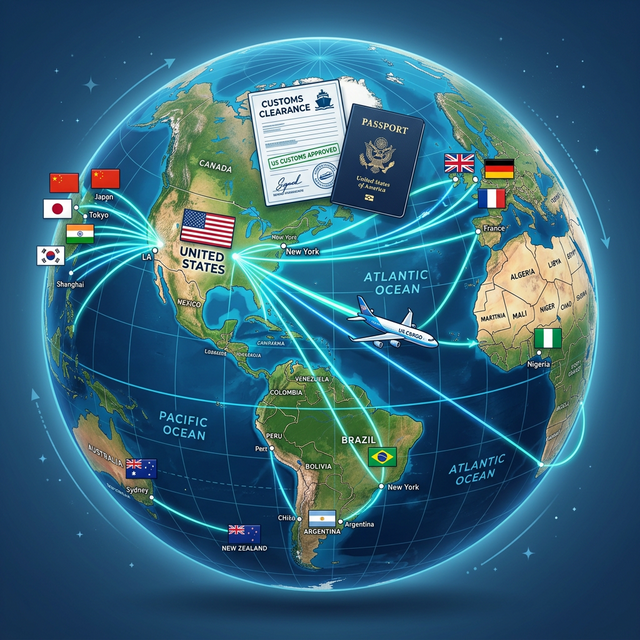
How International Zones Work
Unlike domestic zones (2–8 based on distance), international zones are based on country groupings. Carriers cluster countries into zone categories based on trade volume, geographic proximity, and logistics infrastructure.
Example: FedEx International Zone Structure
| Zone Group | Countries | Examples |
|---|---|---|
| A | Canada | All provinces |
| B | Mexico | All states |
| C | Caribbean and Central America | Jamaica, Costa Rica, Panama |
| D | South America | Brazil, Argentina, Colombia |
| E | Western Europe | UK, Germany, France, Spain |
| F | Eastern Europe | Poland, Czech Republic, Hungary |
| G | Middle East | UAE, Saudi Arabia, Israel |
| H | South/Southeast Asia | India, Thailand, Vietnam |
| I | East Asia | Japan, South Korea, China |
| J | Oceania | Australia, New Zealand |
| K | Africa | South Africa, Nigeria, Kenya |
Zone designations vary by carrier and change periodically.
Each zone group has its own rate table with different pricing per weight.
Customs Duties and Taxes
The biggest difference between domestic and international shipping is customs clearance. Every international shipment must pass through customs at the destination country, which may result in:
Duties
Import duties are taxes charged by the destination country on imported goods. Duty rates depend on:
- Product classification (HS Code / Harmonized System Code)
- Country of origin
- Declared value
- Trade agreements (e.g., USMCA for Canada/Mexico)
Taxes (VAT/GST)
Most countries charge Value Added Tax (VAT) or Goods and Services Tax (GST) on imports:
| Country | VAT/GST Rate |
|---|---|
| Canada | 5–15% (HST varies by province) |
| UK | 20% |
| EU countries | 17–27% |
| Australia | 10% |
| Japan | 10% |
De Minimis Thresholds
Many countries waive duties and taxes on shipments below a minimum value:
| Country | De Minimis (duty-free below) |
|---|---|
| United States | $800 |
| Canada | CAD $20 (duties) / CAD $40 (taxes) |
| European Union | €150 |
| Australia | AUD $1,000 |
| UK | £135 |
Incoterms: Who Pays What
The incoterm on your shipment determines who is responsible for duties and taxes:
| Incoterm | Shipper Pays | Recipient Pays |
|---|---|---|
| EXW (Ex Works) | Nothing beyond origin | Everything |
| DAP (Delivered at Place) | Transport to destination | Duties and taxes |
| DDP (Delivered Duty Paid) | Everything including duties | Nothing |
DDP provides the best customer experience — no surprise charges — but requires the shipper to estimate and prepay duties.
Required Documentation
| Document | Purpose | Required For |
|---|---|---|
| Commercial Invoice | Declares value and contents | All shipments |
| Packing List | Details contents of each package | Multi-piece shipments |
| Certificate of Origin | Confirms country of manufacture | Duty-free trade agreements |
| SED/EEI | Export declaration for high-value goods | Shipments > $2,500 |
| Import Permit | Authorization for restricted goods | Country/product specific |
International Surcharges
In addition to higher base rates, international shipments may incur:
- International fuel surcharge: 15–25% (higher than domestic)
- Remote area surcharge: For rural international destinations
- Out-of-delivery-area surcharge: Areas beyond carrier’s standard coverage
- Brokerage fees: Customs clearance processing
- Government fees: Import processing, inspections
The Bottom Line
International shipping adds layers of complexity — customs, duties, documentation — that don’t exist in domestic shipping. The key to managing costs and customer expectations is choosing the right incoterm (DDP for premium customer experience, DAP for lower shipper costs), accurately classifying products with HS codes, and selecting the right carrier service tier for each country.
Need help analyzing your international shipping costs? Upload one invoice to ShipMint’s Instant Analysis — free.