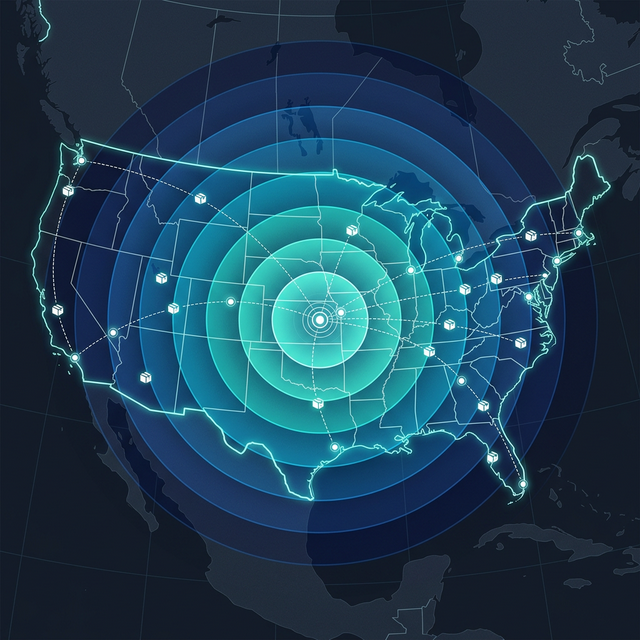
What Is a Shipping Zone?
A shipping zone is a number (typically 2 through 8 for domestic shipments) that represents the distance between your origin zip code and the destination zip code. The higher the zone number, the farther the package is traveling — and the more it costs.
Zones are not measured in exact miles. Instead, they’re based on distance bands determined by each carrier. Both UPS and FedEx use similar zone structures, though the specific zip-to-zone assignments can differ slightly.
How Zones Are Determined
Each origin zip code has its own zone chart — a lookup table that maps every destination zip code prefix (the first 3 digits) to a zone number.
For example, if you’re shipping from zip code 28202 (Charlotte, NC):
| Destination Zip Prefix | City | Zone |
|---|---|---|
| 282 | Charlotte, NC | 2 |
| 303 | Atlanta, GA | 3 |
| 200 | Washington, DC | 4 |
| 606 | Chicago, IL | 5 |
| 802 | Denver, CO | 6 |
| 850 | Phoenix, AZ | 7 |
| 900 | Los Angeles, CA | 8 |
You can look up zone charts on the UPS and FedEx websites by entering your origin zip code. Both carriers publish these charts as downloadable PDFs or interactive tools.
How Zones Affect Your Costs
Zone is a direct multiplier on your base shipping rate. Here’s an example of how the same package — a 10 lb UPS Ground shipment in 2026 — changes price by zone:
| Zone | Published Rate | Cost vs. Zone 2 |
|---|---|---|
| Zone 2 | $10.05 | Baseline |
| Zone 3 | $10.75 | +7% |
| Zone 4 | $12.20 | +21% |
| Zone 5 | $14.05 | +40% |
| Zone 6 | $16.30 | +62% |
| Zone 7 | $18.40 | +83% |
| Zone 8 | $20.55 | +105% |
That’s a 2× cost difference between a local Zone 2 shipment and a cross-country Zone 8 shipment for the exact same package.
Zone Distribution: Why It Matters
Your zone distribution — the percentage of packages going to each zone — is one of the most important metrics in shipping cost analysis.
A shipper located on the East Coast sending most packages to East Coast customers will have a very different cost profile than one shipping coast-to-coast:
Scenario A: East Coast Shipper, East Coast Customers
| Zone | % of Volume | Avg Cost/Pkg |
|---|---|---|
| 2–3 | 55% | $10.40 |
| 4–5 | 35% | $13.10 |
| 6–8 | 10% | $18.40 |
| Blended average | $11.90 |
Scenario B: East Coast Shipper, National Distribution
| Zone | % of Volume | Avg Cost/Pkg |
|---|---|---|
| 2–3 | 20% | $10.40 |
| 4–5 | 35% | $13.10 |
| 6–8 | 45% | $18.40 |
| Blended average | $14.85 |
That’s a 25% higher average cost per package — just from zone distribution.
Strategies to Reduce Your Average Zone
If zone distance is driving up your costs, there are several strategies to consider:
1. Distributed Fulfillment
Shipping from multiple warehouse locations closer to your customers dramatically reduces average zone. Many 3PLs offer multi-node fulfillment networks.
2. Zone Skipping
For high-volume shippers, zone skipping involves truckloading pallets of packages to a carrier sort facility closer to the destination zone, reducing the per-package zone cost.
3. Regional Carriers
Carriers like OnTrac, LSO, and Spee-Dee offer competitive rates for regional deliveries that would otherwise be higher-zone shipments through national carriers.
4. Carrier Rate Shopping
UPS and FedEx can have different zone assignments for the same origin-destination pair. Rate shopping each shipment across carriers can yield savings on zone-heavy lanes.
Special Zones
Beyond the standard 2–8 zones, there are special zone designations:
- Zone 9+: Alaska, Hawaii, Puerto Rico, and U.S. territories. Significantly higher rates plus additional surcharges.
- Zone 17–46: International zones used by FedEx for export shipments, grouped by country/region.
- Intra-zone: Some carriers offer discounted rates for shipments within the same zone, particularly Zone 2 (local).
The Bottom Line
Zones are one of the three primary cost drivers in parcel shipping (alongside weight and service level). Understanding your zone distribution helps you make strategic decisions about warehouse placement, carrier selection, and customer shipping policies.
Want to see your zone distribution and its impact on costs? Upload one invoice to ShipMint’s Instant Analysis tool for a complete breakdown — free.