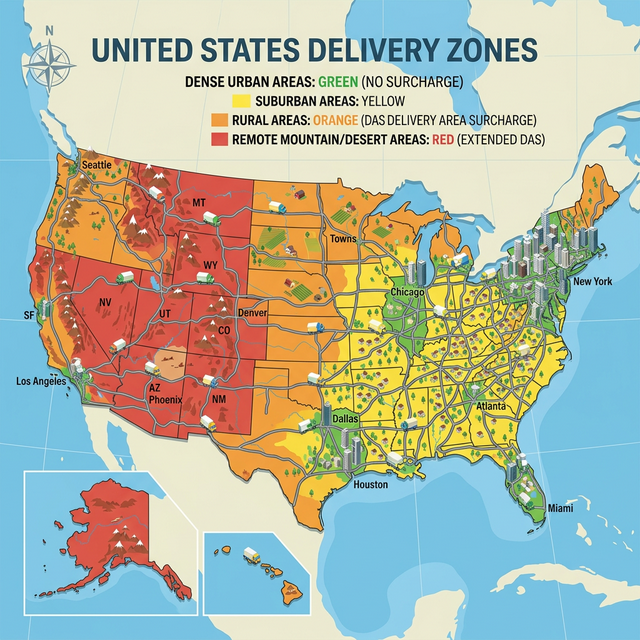
What Is a Delivery Area Surcharge?
A Delivery Area Surcharge (DAS) is an additional per-package fee that UPS and FedEx charge for deliveries to locations they’ve designated as hard to reach — typically rural, remote, or low-density areas that are expensive to service.
DAS exists because delivering packages to these areas requires longer drive times, more fuel, and fewer packages per route compared to urban and suburban zones.
The Three Tiers of DAS
Both carriers maintain tiered DAS structures based on how remote the destination is:
2026 DAS Rates
| DAS Tier | UPS Ground | UPS Air | FedEx Ground | FedEx Express |
|---|---|---|---|---|
| DAS (Standard) | $4.00 | $4.00 | $4.10 | $4.10 |
| DAS Extended | $5.00 | $5.00 | $5.25 | $5.25 |
| DAS Remote | $6.50 | $6.50 | $7.75 | $7.75 |
These charges are per package and applied in addition to the residential surcharge (if applicable). A package going to a remote residential address could incur both a $6.95 residential surcharge and a $7.75 DAS Remote surcharge — adding $14.70 to the base rate before you even count fuel.
DAS for Residential vs. Commercial
Some DAS tiers have separate residential and commercial rates:
| DAS Tier | Commercial | Residential |
|---|---|---|
| DAS Standard | $4.00 | $4.00 |
| DAS Extended | $5.00 | $5.25 |
| DAS Remote | $6.50 | $8.00+ |
How Are DAS Zip Codes Determined?
Each carrier publishes a list of zip codes that trigger DAS charges. These lists are updated annually and can change — zip codes can be added or removed each year.
DAS classification is based on:
- Population density: Fewer people per square mile = more likely DAS
- Distance from sort facility: Farther from the carrier’s nearest hub = higher DAS tier
- Delivery route economics: Routes with very few stops per day
How Many Zip Codes Are Affected?
The number of DAS-designated zip codes is significant:
| Tier | Approximate Zip Codes (2026) |
|---|---|
| DAS Standard | ~10,000 |
| DAS Extended | ~4,500 |
| DAS Remote | ~1,200 |
Combined, roughly 15,000+ zip codes carry some form of DAS surcharge. That represents a meaningful portion of the U.S. delivery footprint, particularly for shippers with national distribution.
Who Gets Hit Hardest by DAS?
DAS disproportionately affects:
- National e-commerce brands: Broad customer base including rural areas
- Agricultural and outdoor brands: Customer base skews rural
- Healthcare and medical supply: Patients in all areas, including remote
- Subscription services: Fixed delivery destinations that can’t be changed
If 10–20% of your shipments go to DAS zones, the aggregate cost impact is substantial.
How to Check If a Zip Code Is DAS
Both carriers provide downloadable lists on their websites:
- UPS: Search “UPS Delivery Area Surcharge” on ups.com for the current zip code list
- FedEx: Search “FedEx Delivery Area Surcharge” on fedex.com for the downloadable CSV
You can also integrate DAS zip code checking into your shipping software to flag DAS orders before they ship.
Strategies to Reduce DAS Impact
1. Negotiate DAS Rates
Like all surcharges, DAS is negotiable in carrier agreements. High-volume shippers can often achieve 20–40% reductions:
| Published | Negotiated (example) | Savings |
|---|---|---|
| $4.00 (Standard) | $2.75 | 31% |
| $5.25 (Extended) | $3.50 | 33% |
| $7.75 (Remote) | $5.00 | 35% |
2. Use Regional Carriers
Regional carriers (OnTrac, Spee-Dee, LSO, etc.) often do not charge DAS, or charge significantly less, for areas within their coverage footprint.
3. USPS for Remote Areas
USPS does not charge delivery area surcharges. For remote, rural, and DAS Extended/Remote zip codes, hybrid services like UPS SurePost or FedEx Ground Economy can be significantly cheaper.
4. Adjust Shipping Policies by Zone
Some shippers implement zone-based shipping rates at checkout, passing through partial DAS costs to customers in remote areas rather than absorbing them entirely.
5. Optimize Warehouse Locations
If a large percentage of your DAS shipments originate from the same warehouse, consider whether a secondary fulfillment location closer to those customers would reduce both zone costs and DAS frequency.
Annual DAS Changes
Each January, carriers update their DAS zip code lists. In recent years, the trend has been toward expansion — more zip codes being added to DAS lists than removed. The 2026 update added approximately 200 new DAS zip codes across both carriers.
This means your DAS exposure can increase year over year even if your customer base doesn’t change. Annual audits of your DAS distribution are essential.
The Bottom Line
Delivery Area Surcharges are a significant cost for any shipper with national reach. At $4–$8+ per package, they can rival or exceed the residential surcharge for packages going to rural and remote areas. The key defense is a combination of negotiated DAS rates, strategic use of USPS/regional carriers for remote areas, and proactive zip code monitoring.
Want to see your DAS exposure? Upload one invoice to ShipMint’s Instant Analysis and we’ll map your DAS distribution — free.